Product market fit is a measurable pattern. It shows up in activation, retention, depth of use, and organic pull. Treat it as a set of signals rather than a vibe, and you will avoid months of self-deception.
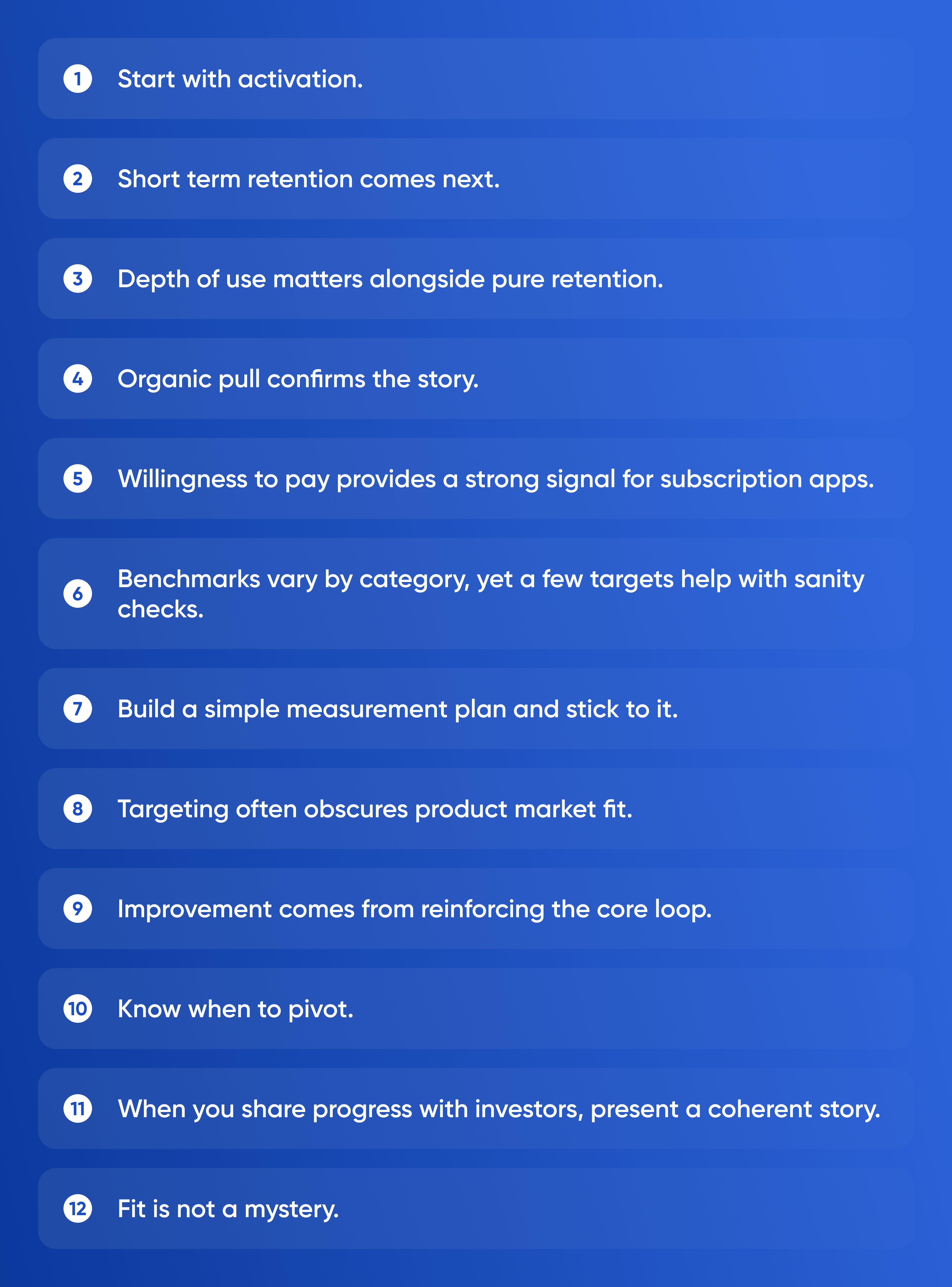
Start with activation. Define a single action that represents first value. It must reflect the core purpose of your app. Creating and sharing a file qualifies. Completing a guided workout qualifies. Sending a message to another person qualifies. Count the share of new users who reach that action within the first session or within the first day. This tells you whether your onboarding and value promise are aligned.
Short term retention comes next. Day one and day seven retention show whether users return quickly enough to repeat the value. If these numbers collapse, the issue is usually either a weak first value or friction that blocks the second step. Mid term retention sits around week four and week eight. A curve that flattens above a modest baseline by week four is a positive sign in many consumer categories. It implies a group that finds recurring value and keeps coming back without heavy incentives.
Depth of use matters alongside pure retention. Sessions per week, items created, or tasks completed per active user will reveal whether power increases with familiarity. Healthy products often show stable or rising depth as cohorts age. If depth falls as you grow, it is a warning that later users do not reach the same value as early adopters.
Organic pull confirms the story. Look for invite acceptance, content shares, and a rising share of installs that arrive without paid spend. This does not need to dominate early, but it should exist. A product that depends entirely on paid traffic during the first months often faces a steep hill later.
Willingness to pay provides a strong signal for subscription apps. Trials started, conversions to paid, and early renewal rates reveal whether users value what you offer. In the early stage, do not chase perfect pricing. Pick a simple plan, test annual first, and observe behavior. The direction of change in conversions and renewals tells you more than any single point estimate.
Benchmarks vary by category, yet a few targets help with sanity checks. Many simple consumer apps aim for activation above the forty percent range in week one cohorts. Day one retention in the thirties and day seven in the mid teens can be workable starting points. Week four above ten percent is encouraging for young products. For subscriptions, trial to paid in the low single digits is common at the start, with room to improve into the high single digits through better onboarding and clearer value messaging. Treat these as directional, not as a grade.
Build a simple measurement plan and stick to it. Instrument events for activation and key steps. Build weekly cohorts and compare by channel and version. Add structured qualitative loops through in app surveys, support tagging, and short interviews that focus on what users were trying to achieve rather than on features. Publish a one page weekly note that lists what improved, what fell, and what you will try next. This keeps the team aligned and avoids data thrash.
Targeting often obscures product market fit. If your curve sags, check whether you are speaking to the right segment. Narrow the ICP and adjust the landing page promise to match. A fitness app for beginner runners will retain differently than a generic health app. A landlord tool for owners with fewer than twenty units will behave differently than a broad real estate platform. Matching message, product, and audience often moves the curve more than adding features.
Improvement comes from reinforcing the core loop. Cut steps to reach first value. Replace empty states with smart defaults. Personalize content from the start when you can. Add reminders only when they support real value. Fix reliability issues fast since crashes and slow loads break habits and erase goodwill.
Know when to pivot. If week four retention sits near zero after several cycles of work on activation and core value, the market is telling you something. If users praise the idea in interviews but do not return without incentives, you likely have a value gap. If acquisition costs rise while depth of use remains shallow, the unit economics will not recover with growth. A clear decision at this stage saves time and lets you redeploy energy.
When you share progress with investors, present a coherent story. Define activation clearly. Show retention curves by cohort with notes on what changed between cohorts. Include a short narrative that links the numbers to actions. Add two or three quotes that illustrate the difference between users who stay and those who churn. This signals discipline and increases confidence that you will find fit if it exists.
Fit is not a mystery. Track the right signals from day one. Observe how they shift as you change onboarding, copy, and the core loop. Keep learning cycles short. When the week four curve flattens and organic pull appears, you can invest with greater confidence.