An app’s first impression decides whether users stay or leave. Founders often think growth depends on marketing, but the real battle happens inside the first session. Onboarding is not about showing features. It is about helping users reach value quickly. The faster someone experiences that first moment of success, the higher your activation and retention will climb.
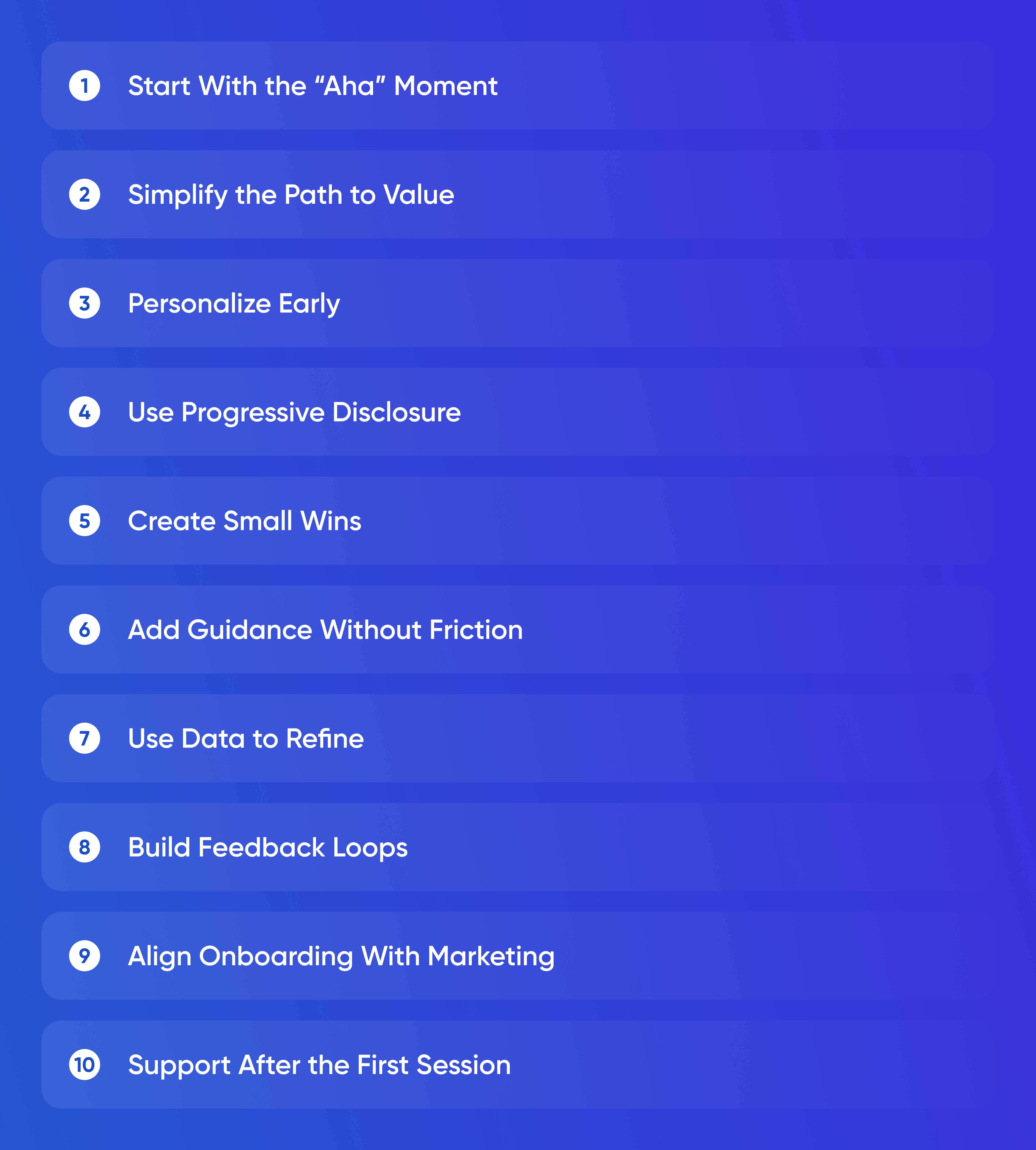
Start With the “Aha”
Moment
Every successful app has a single “aha” moment that defines its purpose. It might be sending the first message, completing the first order, or creating the first note. Onboarding should guide every user toward that outcome with as little friction as possible. The job of onboarding is not to teach everything. It is to help users achieve one meaningful win.
When founders try to explain every feature, they slow users down. Instead, build onboarding around action. Replace tutorials with progress toward a goal. The most engaging apps let users do something useful within the first sixty seconds.
Simplify the Path to Value
A common mistake is adding too many steps before users see results. Long signups, complex permissions, and early customization requests create drop-off. Ask only for what is essential. If you need personal information, explain why it matters. Every unnecessary question feels like work.
Clarity beats decoration. Text should tell users what to do next, not just describe features. Buttons should use verbs that match intent, such as “Create,” “Start,” or “Continue.” Design consistency reduces cognitive load and keeps users moving naturally through the flow.
Personalize Early
Personalization builds relevance and makes users feel seen. Even light personalization helps. Ask one smart question and use the answer immediately. For example, a budgeting app that asks about financial goals can adjust default categories. A fitness app that asks about intensity can adjust starting levels. When people see results that reflect their input, they feel the product is already working for them.
However, personalization should never block progress. Let users skip setup and return later. Optional customization is more effective than mandatory configuration. The first experience should feel fast, not demanding.
Use Progressive Disclosure
Not every feature belongs in the first minute. Reveal complexity gradually as users need it. This method, called progressive disclosure, makes the product easier to learn. Start with the core task and introduce advanced options only after users complete it once.
For instance, an email marketing platform can first show how to send a basic campaign. Once the user completes that task, the system can suggest templates, segmentation, or A/B testing. Each layer of discovery builds confidence without overwhelming.
Create Small Wins
People continue actions that reward them. Each completed step should produce visible progress. This can be as simple as a checkmark, a success screen, or a congratulatory message. These cues are not decoration. They reinforce momentum and reduce abandonment.
Small wins also apply to content. Empty dashboards are demotivating. Preload them with sample data or a welcoming message so users never see a blank screen. Seeing activity—even fake examples—helps users imagine how their data will look once they start.
Add Guidance Without Friction
Tooltips, checklists, and interactive cues can support learning, but they must never trap the user. Keep them short and clear. Each hint should help someone move forward, not pause. If users close the guide, the product should still make sense. The best guidance is invisible because the design itself teaches the behavior.
Video tutorials can work for complex workflows, but only if they are optional. Most people prefer to explore on their own. Provide short, skippable videos for those who want them.
Use Data to Refine
Activation is measurable. Define a clear metric that represents success within the first session or first day. It might be completing a task, connecting an account, or creating content. Track how many users reach that event and how long it takes.
If many users drop off at the same step, the friction point is obvious. Remove or rework it. Measure again. Onboarding is not a one-time project. It is a continuous experiment that evolves with your product.
Build Feedback Loops
Ask for quick feedback when users complete onboarding. A single question such as “Was it easy to get started?” can highlight confusion before it spreads. Pair this with behavioral data to understand why some users succeed while others stop. Then adjust copy, design, or flow based on real behavior, not assumptions.
Align Onboarding With Marketing
Marketing sets expectations. Onboarding fulfills them. If ads promise instant results but setup takes twenty steps, users will churn. Review your acquisition messages and ensure they match the real experience. The first few screens should feel like a continuation of your ad or landing page, not a different product.
Support After the First Session
Onboarding does not end when users log out. Use gentle reminders to bring them back. A well-timed email or push notification that highlights progress can re-engage them. Focus on value, not urgency. A message like “Your first project is waiting for review” performs better than “Come back now.”
Follow-up content such as short guides or success stories helps users deepen engagement. Each communication should answer the question: what should I do next to get more value?
Conclusion
Effective onboarding is about clarity and speed to value. Help users reach one meaningful goal within the first minute, reveal complexity gradually, and measure every interaction. When onboarding feels effortless, activation improves naturally. Founders who design with empathy and precision turn first-time visitors into long-term users, one small win at a time.