Security is not an add-on. It is part of product design. Early-stage founders often delay security work because they want to move fast, but the cost of one breach or leak can destroy trust overnight. Strong security does not require a large team. It requires discipline, simple rules, and early habits that scale with growth.
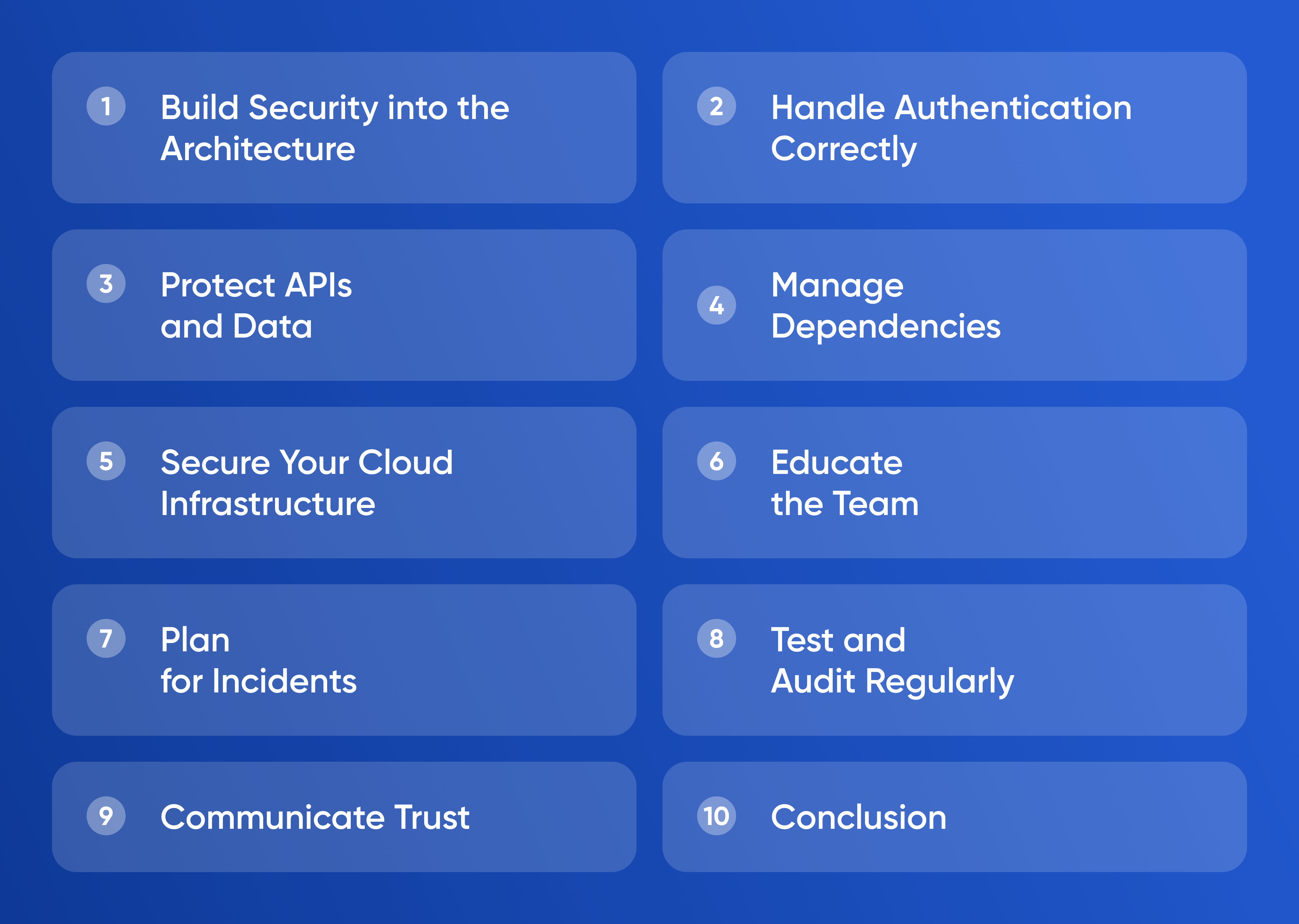
Build Security into the
Architecture
Start by separating environments. Keep development, staging, and production isolated so test data cannot leak into live systems. Use environment variables for secrets instead of storing them in code. Cloud providers such as AWS, Google Cloud, and Azure offer built-in secret managers that make this easy.
Follow the rule of least privilege. Every user, service, and database should have only the access it needs. Grant temporary permissions for one-time actions rather than permanent rights. Most data breaches happen because someone had more access than necessary.
Encrypt everything in transit and at rest. Use HTTPS for all traffic and enforce TLS 1.2 or higher. For databases, turn on encryption provided by the cloud vendor instead of rolling your own. Good encryption is already available. You just have to enable it.
Handle Authentication Correctly
Passwords are the weakest part of most systems. Never store them in plain text. Use a tested library that handles hashing and salting automatically. Consider using managed identity services such as Auth0, Firebase Auth, or AWS Cognito. They handle login, tokens, and two-factor authentication while keeping compliance up to date.
Support single sign-on when possible. Users trust products that integrate with existing identity providers such as Google or Apple. It also reduces the chance of password reuse, which is a common attack vector.
Implement rate limits on login attempts to prevent brute-force attacks. Combine this with alerts for suspicious activity such as multiple failed logins from different regions.
Protect APIs and Data
APIs are often the most exposed part of a startup’s system. Validate all incoming data and sanitize outputs. Never trust client input, even if it comes from your own app. SQL injection and cross-site scripting still cause many breaches in small products.
Use token-based authentication such as JWT with expiration times. Tokens should be short-lived and refreshable through secure endpoints. This reduces risk if one is leaked.
Store personal data minimally. If your feature does not require sensitive information, do not collect it. Data you never store cannot be stolen. For information you must keep, such as email addresses or payment details, restrict access through strict database roles and audit logs.
Manage Dependencies
Modern software depends on hundreds of third-party packages. Each can introduce risk. Use dependency scanners like npm audit or pip-audit to check for vulnerabilities. Update packages regularly, but avoid automatic updates in production. Test before deploying to avoid breaking changes.
Track which libraries handle security-critical tasks such as cryptography or authentication. Prefer widely used, actively maintained options over small or unverified ones. Document every external dependency in your repository so new team members understand the exposure.
Secure Your Cloud Infrastructure
Misconfigured cloud storage is a leading cause of data leaks. Set all storage buckets to private by default. Use role-based access rather than static credentials. Monitor logs for unauthorized access and configure alerts for changes to security groups or firewall rules.
Enable automatic backups with encryption and test recovery at least once. A backup that cannot be restored is useless. Regular restoration drills reveal missing permissions or broken scripts before a crisis.
For continuous deployment, store credentials only in CI/CD secret stores. Never include them in scripts or repositories. Limit who can trigger deployments and review logs after each release.
Educate the Team
Security is a culture. Even the best code can fail if the team ignores basic hygiene. Teach everyone to recognize phishing attempts and to use password managers instead of reusing passwords. Require two-factor authentication for all internal tools.
Encourage developers to write secure code from the start. Add lightweight code reviews that include security checks such as input validation, access control, and logging. Make it normal to discuss risks openly rather than treat them as blame.
Plan for Incidents
No system is perfect. Prepare for failure. Create a short incident response plan that lists who investigates, how to communicate with users, and how to isolate affected systems. The first hour after detection determines the damage.
Set up a clear process for reporting vulnerabilities. A simple security@yourdomain.com email gives ethical hackers a way to disclose issues privately before they go public. Respond quickly and thank them for helping you stay safe.
Test and Audit Regularly
Security testing should be ongoing. Run automated scans for common vulnerabilities monthly. Once you have paying customers, schedule external penetration tests at least twice a year. Third-party auditors bring fresh perspective and often find oversights that internal teams miss.
Review access logs periodically. Remove inactive accounts and rotate API keys on a set schedule. Document these tasks so they become routine rather than emergencies.
Communicate Trust
Customers care about safety. Add a simple page that explains your security practices in plain language. Mention encryption, data handling, and third-party audits. Transparency builds confidence and reduces friction during sales or due diligence.
When handling sensitive data such as health or finance, include compliance badges only when verified. Empty claims damage credibility. Honest communication always earns more trust than exaggerated promises.
Conclusion
Security for startups is about habits, not hardware. Protect data through clear architecture, managed authentication, and continuous vigilance. Teach the team to think in terms of risk reduction rather than fear. When users trust your product, growth follows naturally, and strong security becomes one of your quietest but most powerful advantages.