The MVP Trap: Too Much or Too Little
Theconcept of the Minimum Viable Product has been so thoroughly adopted by thestartup world that it has almost lost its meaning. Some founders interpret MVPas "launch something embarrassingly incomplete." Others interpret itas "build the full product but skip the polish." Both interpretationsmiss the point and lead to products that fail for different reasons.
AnMVP that is too minimal does not give users enough value to validate yourhypothesis. They try it, shrug, and leave — not because your idea is wrong, butbecause the execution did not demonstrate enough of the vision. An MVP that istoo complete burns months of runway building features that your users might noteven want, delaying the feedback loop that the MVP concept was designed toaccelerate.
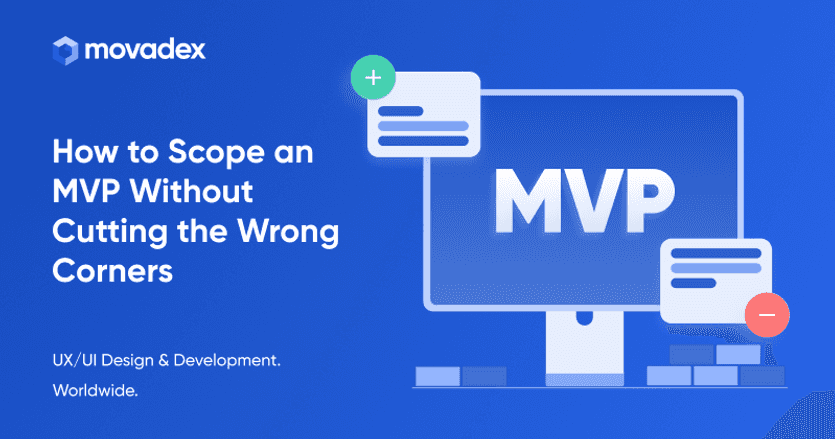
Theart of MVP scoping is finding the precise minimum that proves or disproves yourcore assumption about what users need.
Start With Your Riskiest Assumption
Everyproduct is built on assumptions. You assume users have a specific problem. Youassume they would pay to solve it. You assume your approach to solving it isbetter than the alternatives. Your MVP should be designed to test the riskiestof these assumptions as quickly and cheaply as possible.
Identifywhich assumption, if wrong, would kill your startup. That is your riskiestassumption, and your MVP should be laser-focused on validating or invalidatingit. Everything else is noise at this stage.
Forexample, if your riskiest assumption is that small businesses will pay forautomated bookkeeping, your MVP does not need a beautiful dashboard,multi-currency support, or team collaboration features. It needs to demonstrateautomated bookkeeping clearly enough for a small business owner to say"yes, I would pay for this."
The Feature Prioritization Method ThatActually Works
Listevery feature you can imagine for your product. Then score each one on twodimensions: how much it contributes to testing your riskiest assumption, andhow much effort it requires to build. Plot them on a two-by-two matrix. Highimpact, low effort features go into your MVP. High impact, high effort featuresget simplified versions. Low impact features get cut, regardless of how coolthey seem.
Beruthless about what constitutes the "minimum" in minimum viableproduct. For each feature you include, ask: if I removed this, would usersstill be able to experience and evaluate the core value proposition? If theanswer is yes, remove it.
Thisdoes not mean your MVP should feel broken or half-baked. The features you doinclude should work well. Quality within scope matters enormously. Users canforgive a limited feature set, but they will not forgive features that do notwork properly. Ship fewer things, but ship them at a level of quality thatrepresents your standards.
Common Scoping Mistakes to Avoid
Buildingfor scale before you have users is the most expensive mistake. You do not needKubernetes, microservices, or a distributed database for your MVP. You need aproduct that works for your first hundred users and gives you the data todecide what to build next.
Addingfeatures because competitors have them is another trap. Your MVP is notcompeting with established products. It is competing for attention from aspecific audience with a specific problem. Differentiation at the MVP stagecomes from solving one problem better, not from matching the feature lists ofproducts that have been building for years.
Skippingdesign entirely is also a mistake. Your MVP does not need pixel-perfect visualdesign, but it does need thoughtful interaction design. Users need tounderstand what your product does and how to use it without a tutorial. If yourMVP requires explanation, it is either too complex or poorly designed.
From MVP to Product
Thegoal of your MVP is not to launch a product. It is to learn. Define yoursuccess metrics before you launch, so you know what you are measuring. What userbehavior would validate your assumption? What retention rate would indicategenuine value? What feedback would tell you to pivot?
Afterlaunching your MVP, resist the urge to immediately start adding features.Instead, spend time talking to every user you can reach. Understand theirexperience, their frustrations, their workarounds, and their wishes. Thisqualitative data is often more valuable than any analytics dashboard.
Whenyou are ready to evolve beyond the MVP, use what you learned to define the nextiteration — not by adding everything users asked for, but by focusing on thepatterns in their feedback that point toward deeper product-market fit.
Movadexhas helped dozens of startups scope and build MVPs that validate hypotheseswithout wasting runway. If you are at the stage where you need to turn youridea into a product that users can experience, let us help you find the rightscope.